
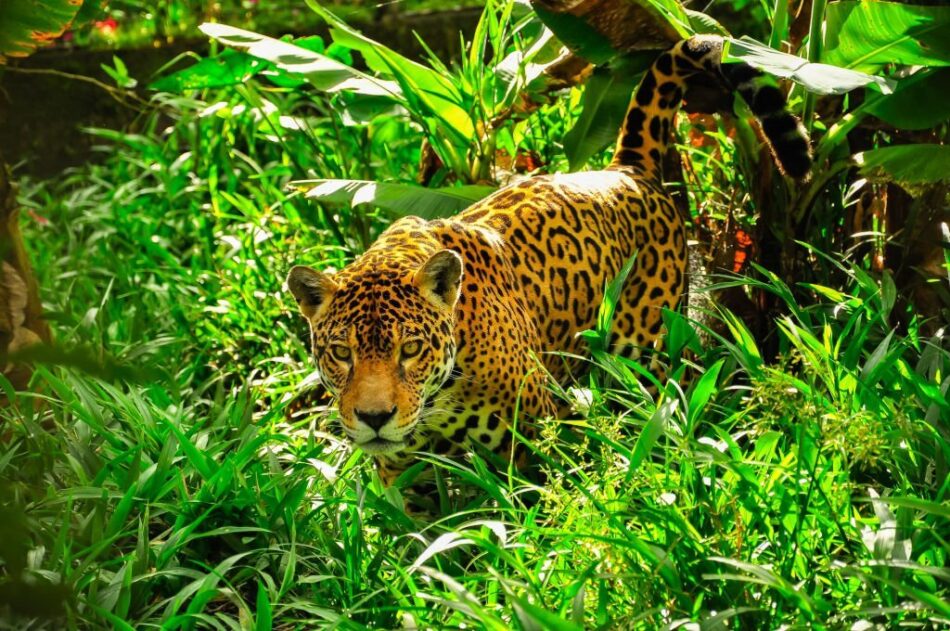
Speed is a crucial survival skill for many animals. Whether they need to chase down prey, escape from predators, or migrate across vast distances, fast animals have a distinct advantage over their slower counterparts. The process of finding out the fastest land animals is quite tricky. It doesn’t matter only about the speed; the size, height, weight, speed, and lifestyle are all things that have to consider for measuring the comparison of the speed of the animals.
In this article, we will explore the top 10 fastest land animals in the world and delve into the fascinating adaptations that allow them to move at incredible speeds.
Table of Content
Top 10 Fastest Land Animal
Cheetah (Top Speed: 65 mph / 105 kph)

The cheetah is the fastest land animal in the world, capable of running up to 75 mph (120 km/h), and it can reach that speed in just 3 seconds! With their lean body, muscular legs, and long tail, they are designed for speed and agility. They are also known for their excellent eyesight and ability to quickly change direction while in pursuit of prey. Cheetahs have spotted coats, which help to hide them making a great camouflage.
Pronghorn Antelope (Top Speed: 62 mph / 100 kph)

The pronghorn antelope is the fastest land animal in North America, capable of running up to 60 mph (96 km/h). Their body is reddish brown, but feature white at the stomachs and wide, white stripes on their throats also. They have specialized lungs, a flexible spine, and muscular legs that allow them to sustain high speeds over long distances. Their eyesight is also excellent, making them able to detect predators from far away.
Springbok (Top Speed: 55 mph / 88 kph)

The springbok is a fast and agile antelope found in southern Africa, capable of running up to 55 mph (88 km/h). The body coat is brown with extensive areas of white including the head, ears, underparts, backs of legs, rump, and tail. Their slender body, muscular legs, and specialized eyesight make them perfectly adapted for escaping predators in the savanna.
Wildebeest (Top Speed: 50 mph / 80 kph)

The wildebeest is a large and powerful antelope that can run up to 50 mph (80 km/h). Their strong legs and muscular body make them well-suited for covering long distances quickly, which is important during migration and when evading predators. Wildebeest never stay in one place for too long. They like taking short naps, while some keep alert for the lion or other predators.
Lion (Top Speed: 50 mph / 80 kph)

Although not as fast as some of the other animals on this list, lions are still capable of running up to 50 mph (80 km/h) for short distances. Their powerful legs, muscular body, and sharp claws make them skilled hunters in the savanna. Lionesses are the main hunter of their “pride”. Most of the lions live in the national parks and game reserves of Africa.
Thomson’s Gazelle (Top Speed: 50 mph / 80 kph)

Thomson’s gazelle is a small and slender antelope that can run up to 50 mph (80 km/h). Their lightweight body and long legs allow them to move quickly and change direction easily, which is important for avoiding predators in their natural habitat.
Blackbuck (Top Speed: 50 mph / 80 kph)

The blackbuck is a species of antelope found in India and Nepal, capable of running up to 50 mph (80 km/h). They have a lean bodies, long legs, and excellent eyesight, which helps them evade predators in the open grasslands where they live. Mature male blackbucks have a black and white coloration which is very different from the reddish yellow hue of immature males and females.
Red Kangaroo (Top Speed: 44 mph / 71 kph)

The red kangaroo is the largest marsupial in the world and can hop at speeds of up to 44 mph (71 km/h). Male red kangaroos are maroon with a white face and belly color. Their long and powerful legs allow them to cover large distances quickly, which is important for escaping predators in the Australian outback.
African Wild Dog (Top Speed: 44 mph / 71 kph)

The African wild dog is a highly social and efficient predator that can run up to 44 mph (71 km/h). Their lean body, long legs, and excellent stamina make them well-suited for hunting prey over long distances. Wild dog packs wander large areas and rarely stay in one place for long.
Greyhound (Top Speed: 43 mph / 69 kph)

The Greyhound is one of the oldest breeds of dogs for pets from ancient human civilization. The Greyhound is a breed of dog that is well-known for its speed, capable of running up to 43 mph (69 km/h). They have a lean and muscular body, long legs, and an excellent sense of sight, which makes them well-suited for racing and hunting.
Read more: The Top 10 Most Beautiful Horses in the World!
Characteristics of the Fastest Land Animals
Speed is the defining characteristic of the fastest land animals, but it is not the only trait that makes them unique. Here are some of the key characteristics that make them stand out from other animals:
Speed: The ability to run at incredible speeds is the most defining characteristic of the fastest land animals. Some of these animals can reach speeds of up to 70 miles per hour.
Agility: The ability to change direction quickly and move with great dexterity is essential for catching prey and avoiding predators. Many of the fastest land animals have highly developed musculature, allowing them to turn on a dime and move with great precision.

Strength: The power to take down prey is another key characteristic of the fastest land animals. They have highly developed musculature and powerful jaws, enabling them to catch and kill prey much larger than themselves.
Endurance: The ability to maintain high speeds over long distances is critical for some of the fastest land animals, such as gazelles and wildebeests. These animals have highly efficient cardiovascular systems that allow them to maintain a high level of activity for extended periods.
Size: There is often a correlation between size and speed among the fastest land animals. Smaller animals tend to be faster and more agile, while larger animals rely more on strength and endurance.
In addition to these physical characteristics, many of the fastest land animals have highly developed senses, such as excellent eyesight and hearing, which allow them to detect predators and prey from great distances. They are also highly adaptable and have evolved to thrive in a variety of environments, from the grasslands of Africa to the deserts of North America.
Human Interaction with the Fastest Land Animals
Humans have long been fascinated by the fastest land animals, but our interaction with them has often been fraught with conflict. Here are some of the ways in which humans have interacted with these animals over the years:
Hunting: Historically, humans have hunted many of the fastest land animals for their meat, fur, and other resources. This has led to the decline of some populations, such as the cheetah, which is now listed as a vulnerable species.
Habitat destruction: As human populations have expanded, the natural habitats of many of the fastest land animals have been destroyed or fragmented, leading to a decline in their populations. This is particularly true for animals that require large ranges, such as the pronghorn.
Conservation efforts: In recent years, there have been many conservation efforts aimed at protecting the fastest land animals from extinction. These efforts include the creation of protected areas, captive breeding programs, and efforts to reduce human-wildlife conflict.

Human-wildlife conflict: In some areas, the fastest land animals come into conflict with humans as they compete for resources such as water and food. This can lead to conflict, with humans sometimes resorting to lethal methods to protect their crops or livestock.
Tourism: The fastest land animals are also a major attraction for tourists, who flock to see them in their natural habitats. While this can be a source of income for local communities, it can also be a source of disturbance for the animals, who may be stressed by the presence of humans.
As we continue to expand our impact on the natural world, it is important that we take steps to protect the fastest land animals and their habitats, ensuring that they remain a part of the natural world for future generations to enjoy.
Final Thoughts
In conclusion, the animal kingdom is home to some incredible creatures that are capable of amazing feats of speed and agility. The top 10 fastest land animals include a diverse range of species, from the sleek and graceful cheetah to the powerful and muscular wildebeest.
Despite their speed, these animals face many challenges in the wild, from competition for resources to the threat of predators and human encroachment on their habitats. It is important that we work to protect these incredible creatures and their environments so that they can continue to thrive for generations to come.
Overall, the top 10 fastest land animals are a testament to the incredible diversity and adaptability of the animal kingdom, and they remind us of the many wonders that exist in the natural world.


